Quick answer
Tulip runs operations apps on the floor; TwinWorks keeps the documentation behind them in sync with Engineering. Both support guided work and execution data, but they solve different problems: TwinWorks drafts and maintains technical documents and interactive procedures from engineering data; Tulip composes apps, agents, automations, analytics, and connected machine or enterprise workflows.
What each product is
Tulip presents a frontline operations platform where manufacturers build governed apps, agents, automations, analytics, and connected workflows on a common operational data model.
As of 10 August 2026, Tulip's pages describe AI Composer, no-code application authoring, AI chat and agents, app versions and approvals, machine and enterprise connectivity, cameras and e-signatures, training and skills workflows, multi-device delivery, and work instructions containing CAD files and rotatable 3D drawings. See the official sources used for this review.
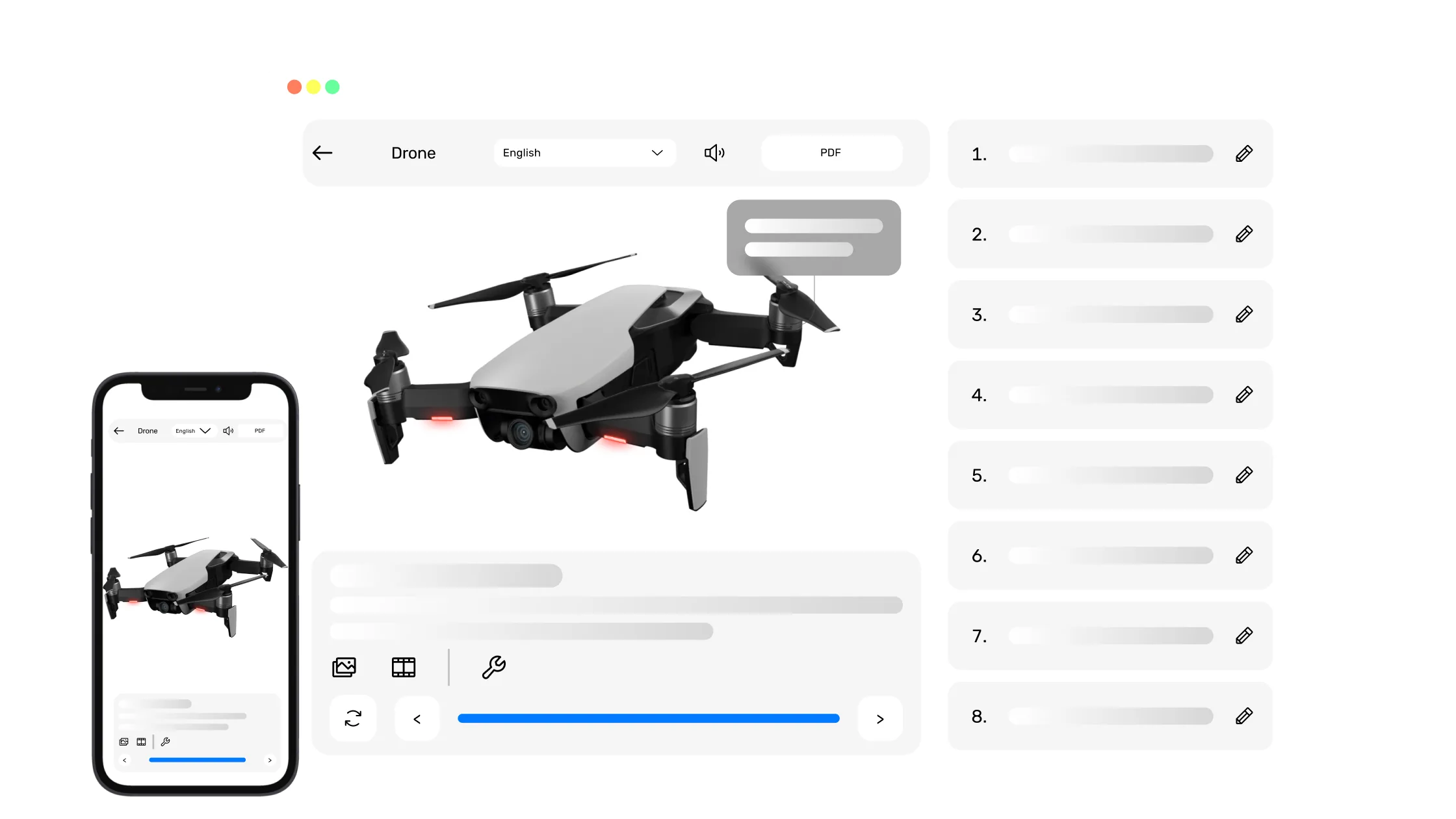
TwinWorks is the layer between what Engineering knows, what Documentation says, and what Operations does. It drafts manuals and work instructions from your engineering data and existing PDF or Word manuals, with PDF-grounded procedure drafts and authored or reviewed 3D actions. When the product changes, it shows the footprint of the change: the manual sections, work instructions, and procedures it touches. Your experts review and approve every draft and every update. TwinWorks publishes web and PDF documentation and interactive 3D procedures, exports descriptive and procedural S1000D data modules, and, with reporting on, collects the execution reports operators send from the floor.
Factual workflow comparison
The table compares how each product handles the same documentation workflows; it is not a feature score. The competitor column summarizes the vendor's own pages as checked on 10 August 2026. Packaging and integrations vary, so confirm the details with each vendor.
| Workflow | TwinWorks (our product) | Tulip (per tulip.co, checked 10 Aug 2026) | Evidence |
|---|---|---|---|
| Primary workflow | Drafts and maintains technical documents and interactive procedures from engineering data, and runs those procedures on the floor, in one product. | Composable frontline operations across apps, agents, automations, analytics, machines, and enterprise systems. | [1] |
| Content creation | AI drafts manuals and work instructions from engineering data and existing PDF or Word manuals, with PDF-grounded procedure drafts and authored or reviewed 3D actions. Experts comment on, edit, and approve every draft before release. | AI Composer (as of 10 August 2026) turns PDF work instructions, SOPs, and checklists into configurable apps, which teams can extend with triggers and logic in the app editor. | [2] |
| Technical-publication model | Modular content: each block records its source and keeps an approved revision history. Exports descriptive and procedural S1000D data modules alongside web and PDF output. | Builds apps and digital guidance on a common operational data model. | [1] [2] |
| Engineering, 3D, and machines | Imports GLB, self-contained GLTF, FBX, OBJ, and USDZ models (STEP/STP in beta). Uses imported geometry for visual authoring. AI can draft procedure text from reference PDFs; authors create or review the 3D actions and approve the instruction before release. | Work-instruction apps can contain diagrams, images, CAD files, video, and rotatable 3D drawings; machine, device, and enterprise connectivity are platform strengths. | [1] [4] |
| Change and review control | Shows the footprint of a change: the document sections and procedures linked to a changed part, tool, consumable, or source, plus broken or outdated references. Experts review and approve each update. | Provides development and published app versions, approval workflows, version comparison, permissions, and audit controls. | [1] |
| Frontline execution | Runs assembly, disassembly, maintenance, operating, and quality-control procedures and records step status, duration, comments, replays, serial and operator fields, ratings, and optional photos. | Apps guide work, validate inputs, capture photos and completion records, use e-signatures, connect devices, and support regulated workflows. | [1] [3] |
| Evidence and analytics | Exports execution reports to PDF, DOCX, and XLSX for review and analysis. | Operational data from people, apps, machines, and connected systems feeds analytics, AI insights, agents, and dashboards. | [1] |
| Deployment and integration | Publishes technical documents to the web and PDF, and interactive 3D procedures to the web. | Apps run on mobile, desktop, touchscreens, machines, and phones, with edge devices, APIs, database connectors, and enterprise governance. | [1] [3] |
Best fit by buying priority
Tulip is the better fit when
- The plant wants configurable applications extending beyond documentation.
- Machine, device, ERP, database, or regulated production workflows are central.
- Teams need a common operational data model for apps, agents, automations, and analytics.
- The organization is prepared to design and govern its own application portfolio.
TwinWorks is the better fit when
- The primary product is technical documentation rather than a general operations application platform.
- Technical publications, modular content, product visuals, and interactive procedures should share one workspace.
- Imported 3D and product relationships matter more than machine connectivity or custom logic.
- The team wants a defined documentation workflow rather than designing a broader app architecture.
What TwinWorks doesn't do yet
- It doesn't update or approve affected documents on its own: it shows what a change touches, and your experts decide.
- Execution records show which steps were completed; they don't prove which exact revision was on screen.
- AR is a limited beta for prepared setups.
How to evaluate the two products
Use one instruction containing a quality input and one product illustration. Compare AI conversion, application or document design, approvals, 3D presentation, device or machine integration, evidence capture, and long-term maintenance.
- Use your own source content and product data, not a vendor sample.
- Record the expert time required to draft, review, approve, translate, and revise.
- Introduce one real engineering change and see how each product finds the affected content and controls the update.
- Run the procedure and check the records, exports, integrations, and which revision each record refers to.
Official sources and methodology
Competitor information was checked on 10 August 2026 and may have changed since. The links below are the vendor pages we used; they describe what each vendor says about its own product, not independent tests. Confirm plans, regions, integrations, and release availability with the vendor.
- Tulip platform overview — official Tulip source.
- Tulip AI Composer documentation — official Tulip source.
- Tulip manufacturing training software — official Tulip source.
- Tulip digital work-instruction use case — official Tulip source.
FAQ
Workflow-specific answers for this comparison.
Is TwinWorks better than Tulip?
They serve different primary workflows. TwinWorks fits technical-documentation programs that also execute procedures. Tulip fits operations teams building connected apps, agents, automations, analytics, and machine or enterprise workflows.
Can TwinWorks replace Tulip?
No, and it isn't meant to. Tulip runs configurable apps, machine connectivity and automations on the shop floor. TwinWorks owns the technical documentation and 3D work instructions behind that work: it shows which content an engineering change touches, and your experts approve each update. The two run side by side.
Does Tulip support AI authoring and 3D content?
Yes. As of 10 August 2026, Tulip's AI Composer creates configurable apps from PDF procedures, and Tulip's work-instruction guidance describes CAD files and rotatable 3D drawings in instructions.
What should an evaluation test?
Build the same workflow in both products and compare source conversion, design effort, approvals, 3D presentation, integrations, execution records, and the maintenance burden for future changes.
Explore the comparison set
See all comparisons in the technical documentation and work-instruction software comparison hub, or the best work instruction software compared. Competitor information checked on 10 August 2026.

Compare one document-led workflow with one operations app
Answer five questions and get a free starter kit: a documentation structure, worksheets, a 3D instruction example, and a sample execution report, previewed before you enter an email. Or book a free 30-minute session: bring an SOP and a product model if you can share them, and we'll show what TwinWorks drafts and where a Tulip app fits alongside.