

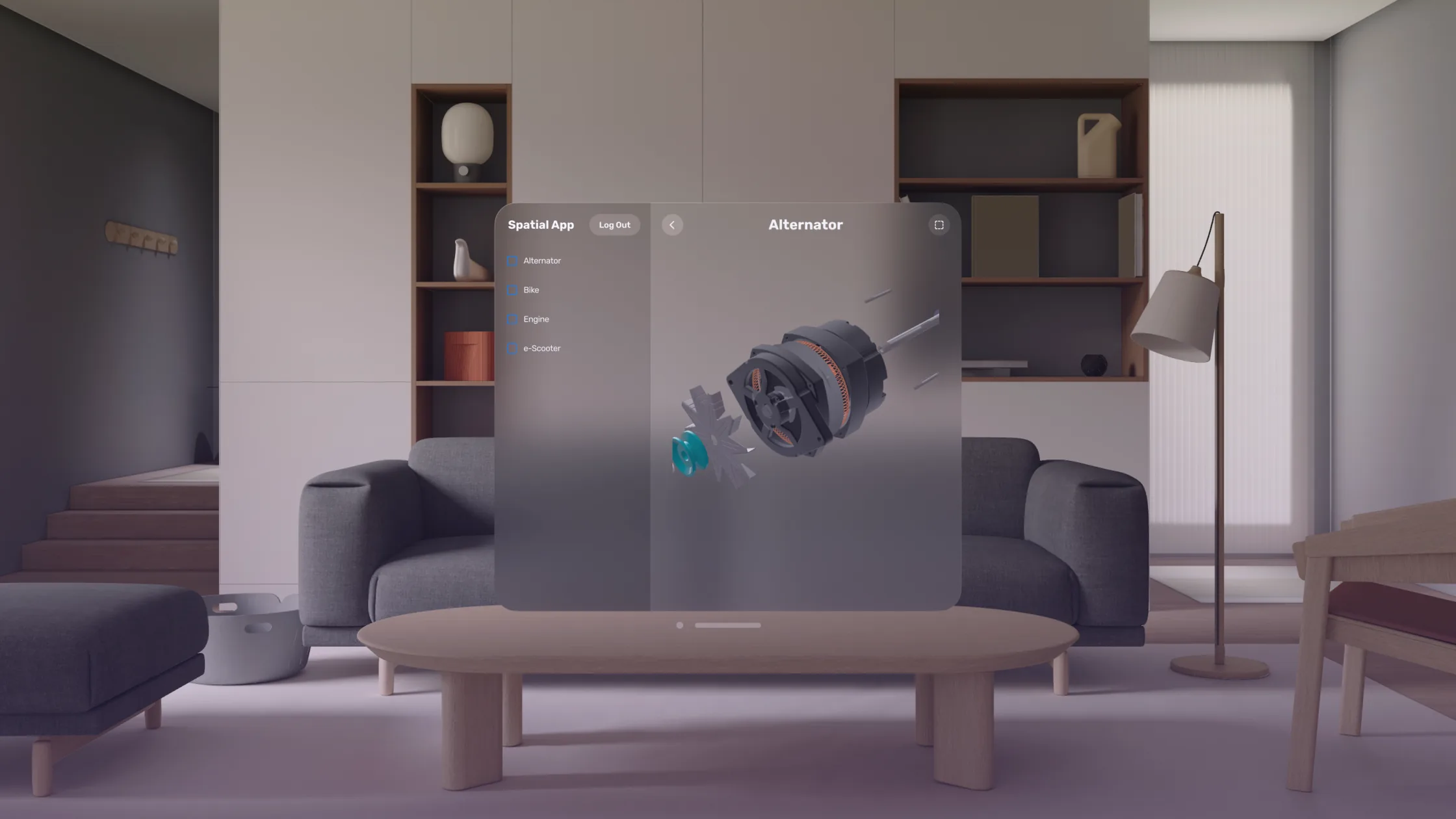
The Documentation Bottleneck
In an era where businesses strive for operational efficiency, effective product rollouts, and seamless customer experiences, documentation remains a persistent bottleneck. Misaligned workflows, unclear instructions, and outdated training methods often lead to prolonged onboarding processes, increased errors rates, and costly operational downtime. To address these challenges, we need a paradigm shift. Enter spatial computing, a groundbreaking technology poised to bridge the gap between complex technical processes and user-friendly execution.
Highlighted in Deloitte’s Tech Trends 2025, spatial computing is revolutionizing how businesses integrate digital and physical operations. By combining augmented reality (AR), virtual reality (VR), and artificial intelligence (AI), spatial computing helps us create interactive experiences. This offers a new solution for challenges related to traditional documentation methods.
What is Spatial Computing?
Spatial computing integrates digital and physical worlds, enabling seamless interactions between humans, computers, and the environment.
- Blending Realities: Merging virtual and augmented reality with the physical world, creating immersive experiences.
- 3D Data Processing: Capturing, processing, and interacting with three-dimensional data.
- Natural Interaction: Interacting with digital objects as if they were physical, using gestures, movements, and voice commands.
- Environmental Understanding: Sensors, cameras, and AI map the physical environment.
Transformative Applications Across Industries
Enhanced Technician Training and Support
Spatial interfaces can give technicians an interactive way to explore difficult procedures. Measure onboarding time, comprehension, and task outcomes in the actual environment instead of assuming a universal result.
Integrated Workflows in Manufacturing
Manufacturers can evaluate spatial interfaces for visual assembly guidance. Any effect on errors, downtime, or rollout speed depends on the task, device, content, and surrounding process.
Optimized Maintenance and Repairs
Interactive instructions and 3D visualizations can make maintenance sequences easier to inspect. Accuracy, speed, downtime, and operating-environment fit should be measured during a representative pilot.
How TwinWorks Applies Spatial Computing
TwinWorks supports interactive procedure authoring around imported 3D product context. AI can separately prepare a review-ready draft grounded in uploaded PDFs; authors edit and release the instruction. The current verified workflow does not automatically generate steps from CAD.
TwinWorks Smart Documentation Benefits
- Review-Ready Procedure Drafting: AI can prepare a draft from uploaded PDFs while imported supported 3D models provide visual context for authoring.
- Execution Feedback: Configured procedures can capture step status, duration, comments, serial and operator fields, ratings, and optional photos for quality review.
- Expert Control: Authors remain responsible for editing and release; the application does not approve work instructions automatically.
- Scoped Evaluation: Validate model fidelity, device access, review authority, execution evidence, security, and deployment requirements with a representative workflow.
TwinWorks is revolutionizing documentation practices. Ready to update your approach?