

In today’s fast-paced manufacturing environment, human error remains one of the leading causes of defects and production delays. Especially in discrete manufacturing, where precision and repeatability are critical, even a small mistake during an assembly task can lead to costly rework, scrap, or worse, a safety risk.
TwinWorks provides visual work-instruction authoring and configured execution evidence for review. Any effect on human error or operator performance should be measured on a representative workflow.
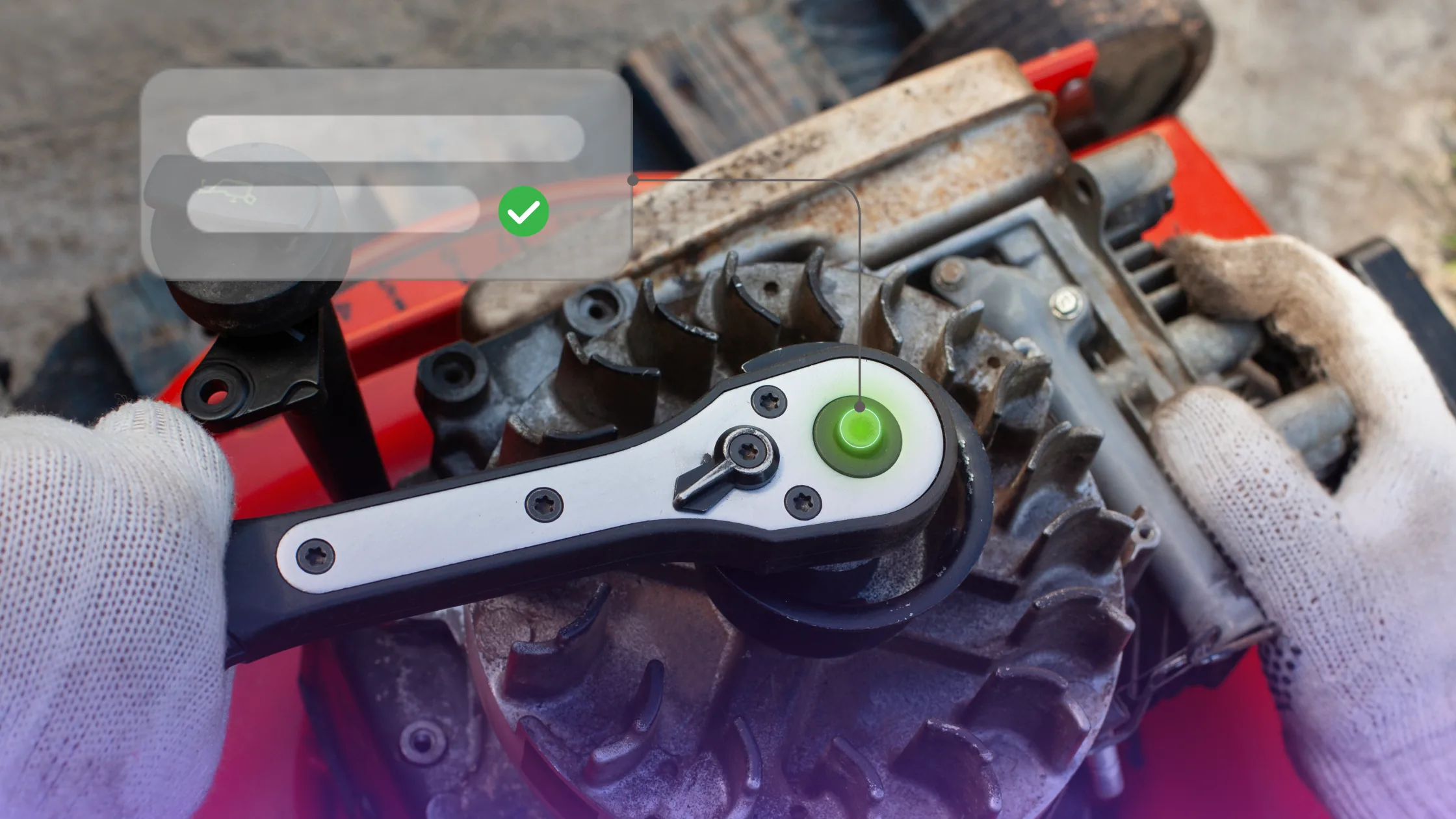
TwinWorks Co-founder, Mina Ghobrial, recently conducted independent research at the Institut Clément Ader to explore how augmented reality (AR) and connected tools could improve outcomes during bolt-tightening tasks.
Human Error in Assembly: A Costly Problem
Traditional work instructions, whether printed on paper or delivered via static PDFs, often lack clarity, consistency, and adaptability. Operators are left interpreting diagrams, navigating language barriers, and manually verifying torque settings or part placements. This increases cognitive load and opens the door to costly human error.
Industry research shows a significant portion of assembly defects are caused not by equipment failure, but by unclear instructions and process deviations. For SMEs with leaner teams and tighter margins, these errors can have an outsized impact.
The Study: AR + Connected Tools vs. Conventional Methods
In the study, participants completed a bolt-tightening task using two different setups:
- Conventional method: Paper-based instructions and a connected torque wrench
- AR-enhanced method: A head-mounted AR display combined with a connected torque wrench that communicated torque values and validated steps in real time
The AR system didn’t just display steps visually. It also integrated with the torque wrench to ensure each action was performed correctly before moving on. This combination of real-time visual guidance and smart validation significantly improved performance across key metrics.
What the Data Says
The results highlight how AR combined with connected tools can enhance quality, reduce errors, and ease operator workload:
| Metric | Conventional Method | AR Enhanced Method |
|---|---|---|
| Execution Time | 10:23 min | 5:39 min |
| Task Load (NASA-TLX) | 7.0 | 5.1 |
| Error Rate | 67.6% | 0% |
| Usability Score (SUS) | 73.1% | 74.4% |
For this specific study task, the reported AR condition reduced task time and cognitive load and recorded no user errors. The findings should not be treated as a universal outcome for another product, process, device, or workforce.
While the findings are specific to this task setup, they point to the broader potential of combining visual technologies with smart tools to reduce human error in industrial operations.
TwinWorks: Making AR Work Instructions Accessible for Manufacturing Teams
The study evaluated a combined system of AR work instructions and connected tools in a bolt-tightening task. TwinWorks has beta/limited AR guidance for procedures prepared with AR-ready tracking anchors; it is not a claim that TwinWorks reproduces the study setup or results.
TwinWorks supports procedure authoring around imported supported 3D formats, while AI can separately prepare a review-ready draft from uploaded PDFs. Experts edit and release the procedure, and device and tracking behavior must be validated for the intended environment.
Key Features:
- Visual authoring with supported imported 3D models; STEP/STP import is beta
- Review-ready procedure drafting grounded in uploaded PDFs
- Editable highlights, part states, annotations, and camera views
- Beta/limited AR guidance for procedures prepared with AR-ready anchors
- Configured execution evidence for quality review
Transform Your Operations with TwinWorks
Assembly
Replace paper instructions with 3D, animated guides that walk your team through complex assemblies.
Training
Evaluate interactive instructions for onboarding with representative operators, then measure time to competence and task performance.
Maintenance
Use step-by-step visuals where they clarify a maintenance procedure, then measure delays, ambiguity, and equipment downtime during a representative pilot.
Discuss your documentation workflow
Backed by research, designed for humans, and built for modern manufacturing.
Ready to test the workflow and define measurable acceptance criteria? Discuss your documentation workflow.