
Quick answer
Arbortext manages what Documentation says in structured XML; TwinWorks connects documentation to what Engineering knows and what Operations does. Arbortext is the stronger fit for established XML, DITA, S1000D, advanced layout, and Windchill-centered publication programs. TwinWorks fits teams that want manuals and work instructions drafted from engineering data, a clear view of what each product change touches, and interactive procedures with execution records on the floor.
What each product is
PTC describes Arbortext as an integrated technical-publications family for XML authoring, illustration, Windchill content management, automated multi-format publishing, parts information, and contextual content delivery.
As of 10 August 2026, PTC's pages describe XML and SGML authoring, DITA 1.3 and 2.0, S1000D, Schematron, reusable components, Windchill integration, CAD and BOM associations, 2D and 3D illustration, advanced layouts, PDF and web publishing, parts catalogs, and manufacturing and service content. See the official sources used for this review.
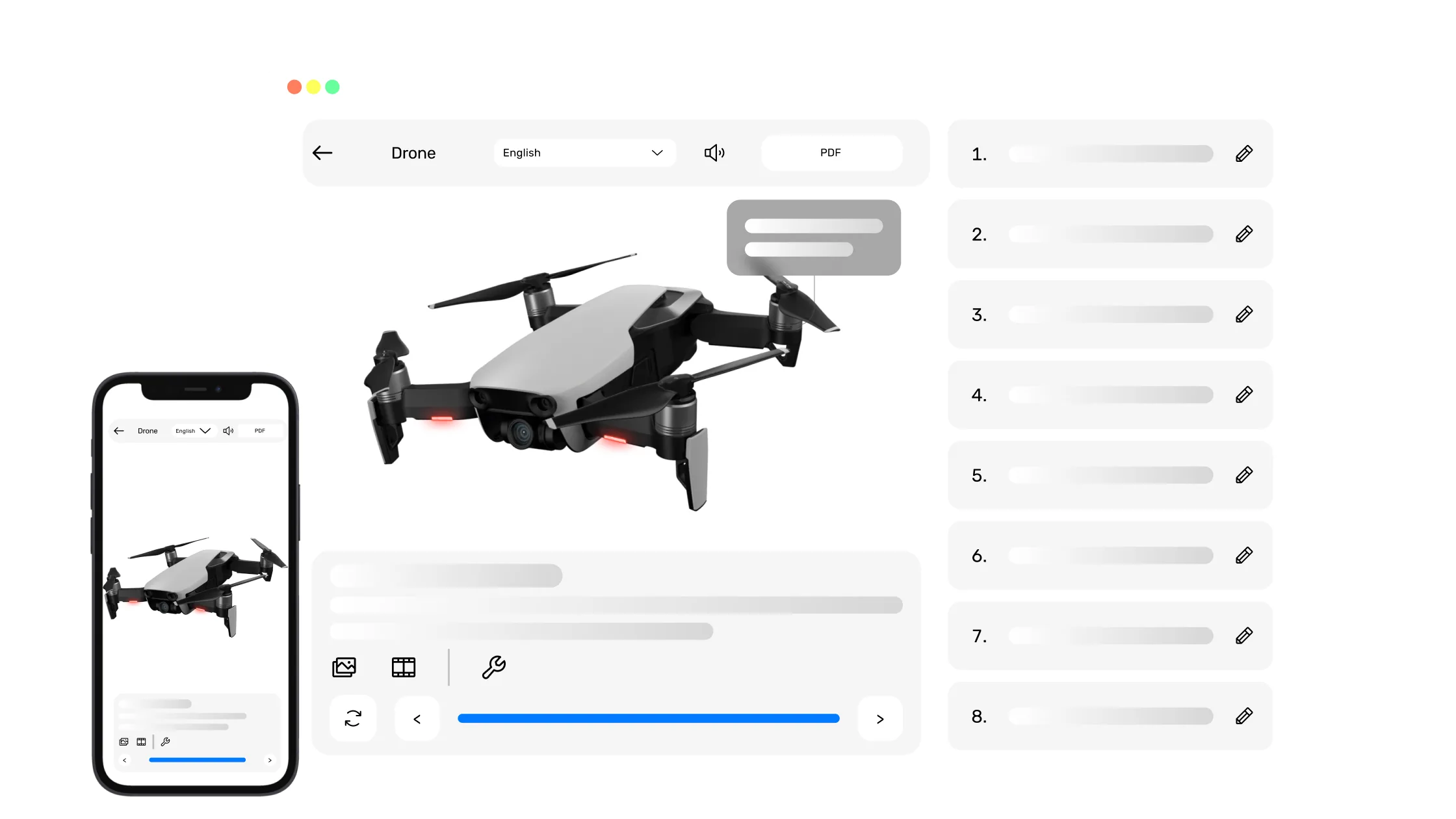
TwinWorks is the layer between what Engineering knows, what Documentation says, and what Operations does. It drafts manuals and work instructions from your engineering data and existing PDF or Word manuals, with PDF-grounded procedure drafts and authored or reviewed 3D actions. When the product changes, it shows the footprint of the change: the manual sections, work instructions, and procedures it touches. Your experts review and approve every draft and every update. TwinWorks publishes web and PDF documentation and interactive 3D procedures, exports descriptive and procedural S1000D data modules, and, with reporting on, collects the execution reports operators send from the floor.
Factual workflow comparison
The table compares how each product handles the same documentation workflows; it is not a feature score. The competitor column summarizes the vendor's own pages as checked on 10 August 2026. Packaging and integrations vary, so confirm the details with each vendor.
| Workflow | TwinWorks (our product) | PTC Arbortext (per ptc.com, checked 10 Aug 2026) | Evidence |
|---|---|---|---|
| Primary workflow | Drafts and maintains technical documents and interactive procedures from engineering data, and runs those procedures on the floor, in one product. | Enterprise technical publications and service information across structured authoring, illustration, Windchill content management, publishing, parts, and delivery. | [1] [2] |
| Content creation | AI drafts manuals and work instructions from engineering data and existing PDF or Word manuals, with PDF-grounded procedure drafts and authored or reviewed 3D actions. Experts comment on, edit, and approve every draft before release. | Arbortext Editor provides structured XML and SGML authoring, validation, profiling, change tracking, and reusable content components. | [2] [3] |
| Standards and content model | Modular content: each block records its source and keeps an approved revision history. Exports descriptive and procedural S1000D data modules alongside web and PDF output. | Supports DITA 1.3 and 2.0 (as of 10 August 2026), S1000D, XML, SGML, Schematron, schemas, XPath, XInclude, and other enterprise publishing standards. | [2] [3] |
| Engineering, PLM, and 3D | Imports GLB, self-contained GLTF, FBX, OBJ, and USDZ models (STEP/STP in beta). Uses imported geometry for visual authoring. AI can draft procedure text from reference PDFs; authors create or review the 3D actions and approve the instruction before release. | Windchill integration links content with CAD, BOMs, product configurations, and engineering data; PTC illustration tools create 2D, 3D, and animated content. | [1] [2] [4] |
| Change and review control | Shows the footprint of a change: the document sections and procedures linked to a changed part, tool, consumable, or source, plus broken or outdated references. Experts review and approve each update. | Windchill manages components, versions, workflows, product associations, change notifications, and cross-functional web review. | [1] [2] [4] |
| Delivery and frontline use | Runs assembly, disassembly, maintenance, operating, and quality-control procedures and records step status, duration, comments, replays, serial and operator fields, ratings, and optional photos. | Publishes PDF, HTML, web, interactive media, manuals, parts catalogs, assembly instructions, and service content. | [1] [2] |
| Execution evidence | Exports execution reports to PDF, DOCX, and XLSX for review and analysis. | If you need step-level execution records (completion, photos, durations), ask PTC how Arbortext or other PTC products provide them. | [1] [2] |
| Implementation context | Publishes technical documents to the web and PDF, and interactive 3D procedures to the web. | Arbortext is a configurable product family involving Editor, Publishing Engine, illustration tools, Windchill options, and content delivery; scope depends on the selected architecture. | [1] [2] |
Best fit by buying priority
PTC Arbortext is the better fit when
- DITA, S1000D, XML or SGML governance is mandatory.
- Windchill is the product and service-information backbone.
- Technical publications require advanced stylesheet, layout, illustration, parts, and multi-channel publishing capabilities.
- The organization already operates an enterprise structured-content program.
TwinWorks is the better fit when
- The program needs technical documents and interactive procedure execution in one product.
- Document-grounded drafting, visual authoring on imported models and expert review matter more than XML standards depth.
- The team needs captured step status, duration, comments, optional photos, and execution-report exports.
- You need S1000D data modules as an output, but not DITA or SGML authoring or deep Windchill integration.
What TwinWorks doesn't do yet
- It doesn't update or approve affected documents on its own: it shows what a change touches, and your experts decide.
- Execution records show which steps were completed; they don't prove which exact revision was on screen.
- AR is a limited beta for prepared setups.
How to evaluate the two products
Use one controlled manual module, one CAD-linked illustration, and one executed service procedure. Compare authoring model, engineering association, review, output quality, standards, execution evidence, and implementation dependencies.
- Use your own source content and product data, not a vendor sample.
- Record the expert time required to draft, review, approve, translate, and revise.
- Introduce one real engineering change and see how each product finds the affected content and controls the update.
- Run the procedure and check the records, exports, integrations, and which revision each record refers to.
Official sources and methodology
Competitor information was checked on 10 August 2026 and may have changed since. The links below are the vendor pages we used; they describe what each vendor says about its own product, not independent tests. Confirm plans, regions, integrations, and release availability with the vendor.
- PTC Arbortext product family — official PTC Arbortext source.
- PTC Arbortext Editor — official PTC Arbortext source.
- PTC Arbortext Editor product details — official PTC Arbortext source.
- PTC Windchill PLM — official PTC Windchill source.
FAQ
Workflow-specific answers for this comparison.
Can TwinWorks replace Arbortext?
Yes, when DITA, SGML, S1000D governance, Arbortext's advanced layout and Windchill-centered publishing are not mandatory. TwinWorks drafts and maintains technical documents and interactive procedures for your experts to review and approve, links content to the parts, tools and sources it references, and exports descriptive and procedural S1000D data modules. If your program requires any of them, keep Arbortext for that and use TwinWorks for work instructions.
When is Arbortext the better fit?
Arbortext is the better fit when XML standards, DITA or S1000D, advanced layout and publishing, parts information, or deep Windchill integration are mandatory.
When is TwinWorks the better fit?
TwinWorks fits teams that want manuals and work instructions drafted from engineering data, a clear view of what each product change touches, interactive 3D procedures, and execution records in one product.
What should an evaluation test?
Use one controlled publication module, CAD-linked illustration, and executed service procedure. Compare standards, reuse, engineering association, review, outputs, execution evidence, and implementation dependencies.
Explore the comparison set
See all comparisons in the technical documentation and work-instruction software comparison hub, or the best work instruction software compared. Competitor information checked on 10 August 2026. For CAD-driven 3D technical communication, read TwinWorks vs Cortona3D RapidAuthor and TwinWorks vs SOLIDWORKS Composer. If S1000D output decides the shortlist, see S1000D data module export from legacy manuals.

Map one publication and service procedure
Answer five questions and get a free starter kit: a documentation structure, worksheets, a 3D instruction example, and a sample execution report, previewed before you enter an email. Or book a free 30-minute session: bring a manual, an engineering source, and a service procedure if you can share them, and we'll show what TwinWorks drafts, what a change touches, and where Arbortext remains the better choice.