Glossary
What is design for assembly (DFA)?
Design for assembly means designing a product with as few parts as possible, each one quick to pick up and fit, from one direction and only one way.
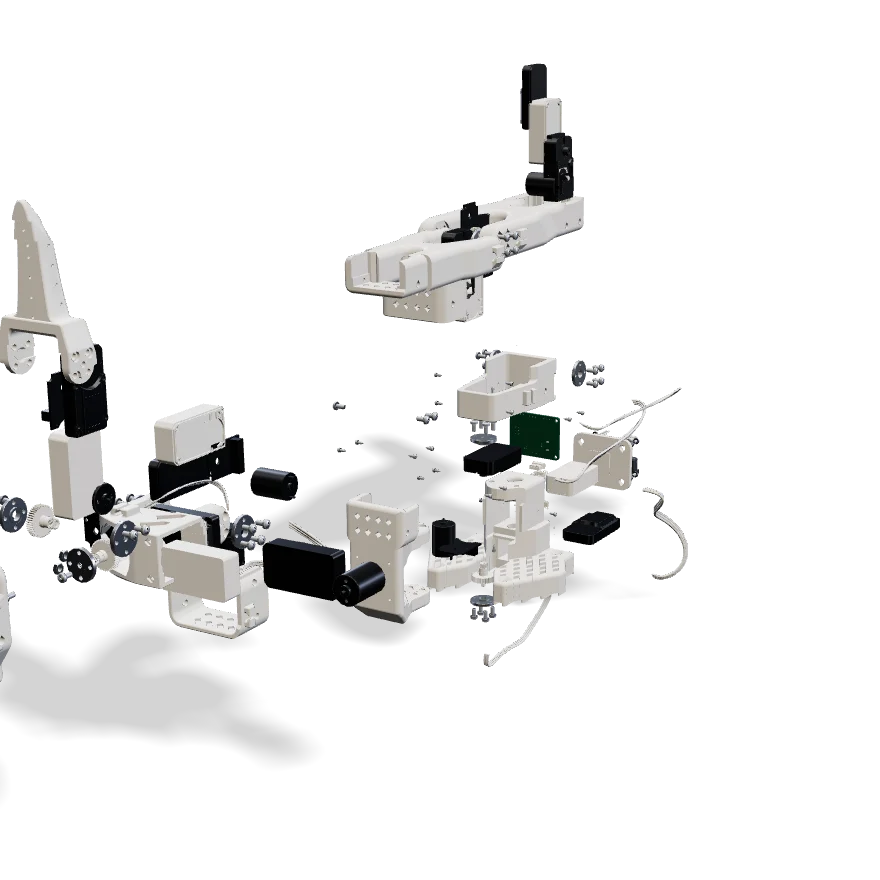
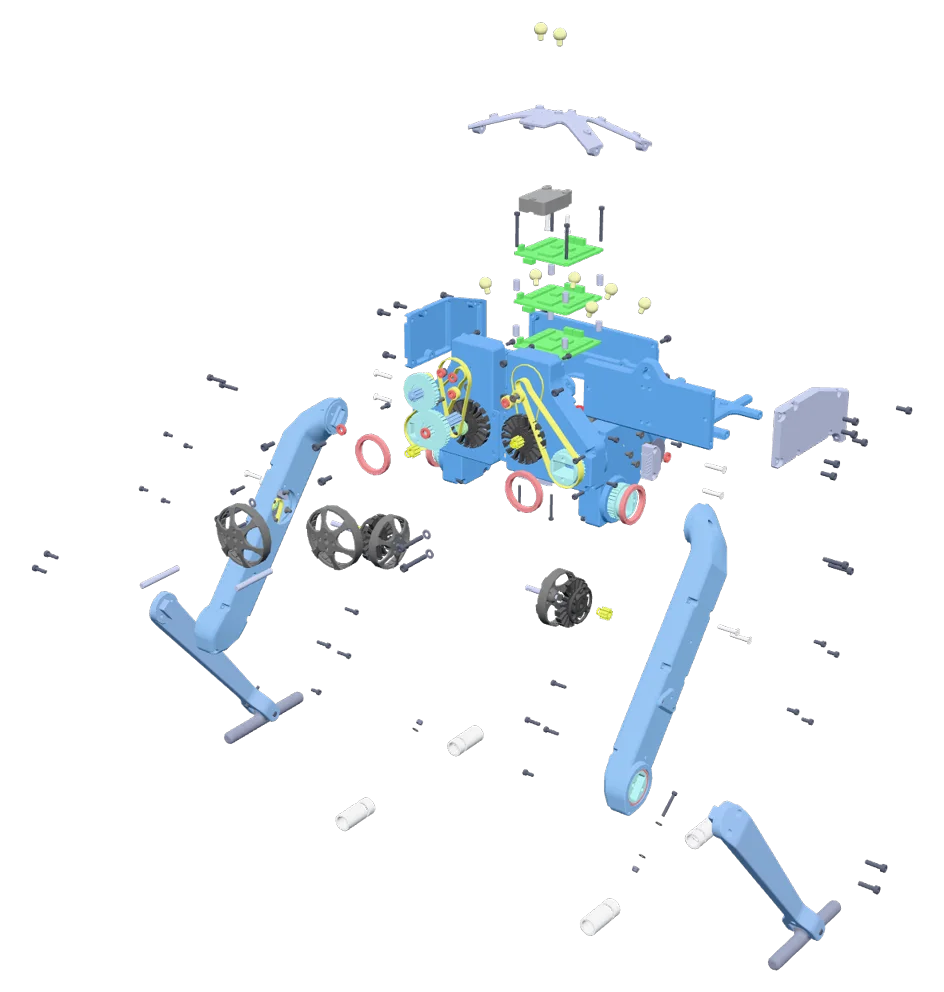
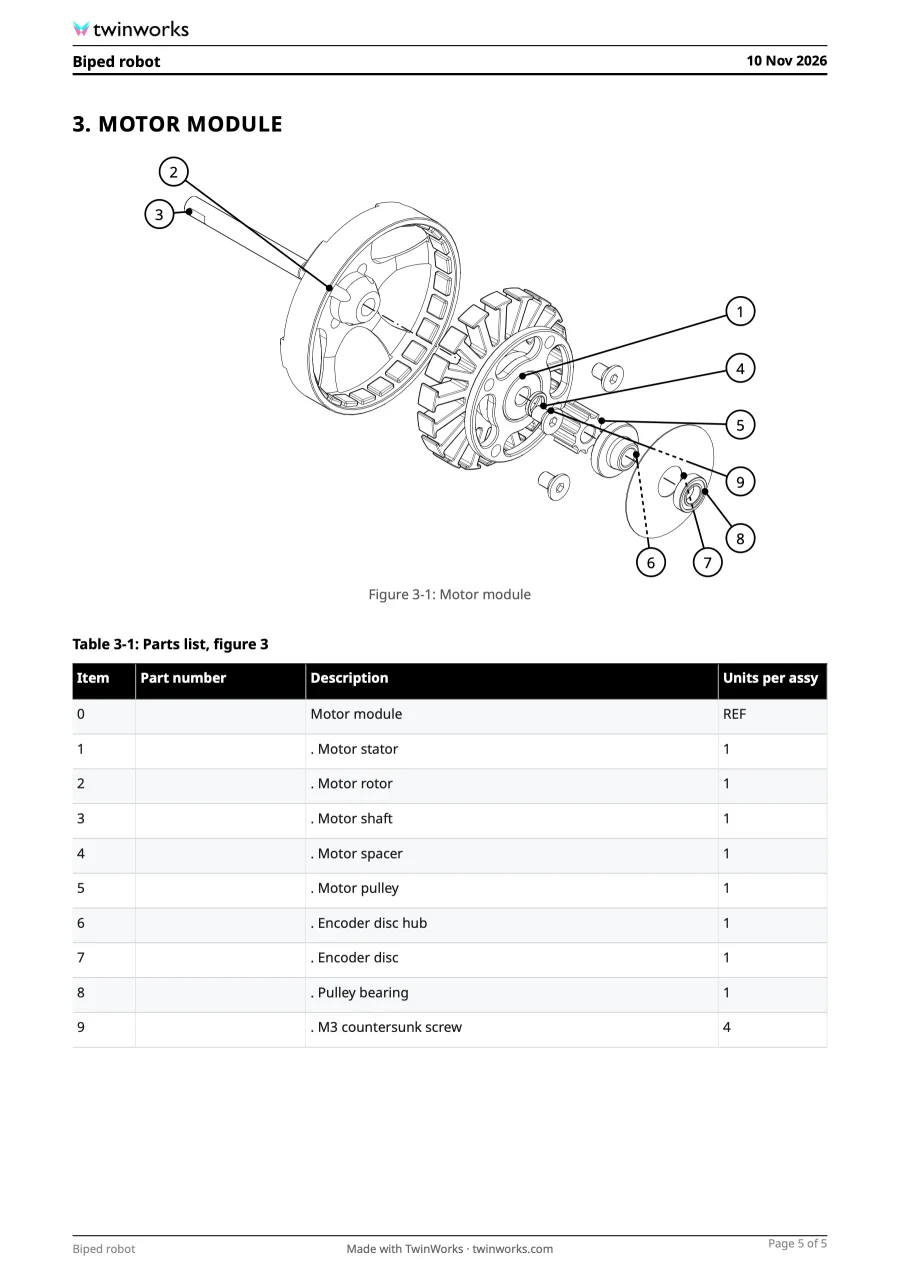
Three questions. For every part.
A part earns its place only if one answer is yes. This is how the Boothroyd Dewhurst method finds the theoretical minimum number of parts.
- Does it move relative to the parts already fitted?A shaft turns in its housing. A lid opens.Yes: keep it separate.
- Must it be a different material, or insulated from them?A rubber seal on a metal cover. An electrical insulator.Yes: keep it separate.
- Must it come apart to fit or service other parts?A cover over a filter. A battery door.Yes: keep it separate.
- No to all three?Combine it with a neighbour, or remove it. Screws, washers and spacers are the usual first candidates.
Six DFA principles. Fewer parts, easier hands.
- Fewer parts Combine parts that do not move, share a material and never come apart.
- Fewer fasteners Snap fits, press fits, or one screw type instead of five.
- One direction Build from the top down, in straight lines, with gravity helping.
- Self-locating Chamfers, lead-ins and pins guide each part into place.
- One way only Symmetric parts, or clearly asymmetric ones that cannot go in wrong.
- Easy to handle No parts that tangle, nest, or are too small or slippery to grip.
A motor mount. Twelve parts become four.
An illustrative review scored with the DFA index: the theoretical minimum number of parts, times 3 seconds, divided by the total assembly time.
Before12 parts, 70 s
- Bracket
- Motor
- Spacer
- Spacer
- S
- S
- S
- S
- W
- W
- W
- W
After4 parts, 24 s
- Bracket
- Motor
- S
- S
- Filled: the theoretical minimum
- S: screw
- W: washer
| Measure | Before | After |
|---|---|---|
| Design | Flat bracket, two loose spacers, four screws and four washers | Bracket with the spacers machined in and a recess that locates the motor; two screws with captive washers |
| Parts | 12 | 4 |
| Theoretical minimum | 2 | 2 |
| Assembly time | 70 s | 24 s |
| DFA index | 2 × 3 / 70 = 9% | 2 × 3 / 24 = 25% |
Questions
What is design for assembly (DFA)?
Design for assembly (DFA) is a method for designing products that are quick and cheap to put together. It first cuts the number of parts, then makes each remaining part easy to handle and insert: from one direction, self-locating, and able to fit only one way.
What are the principles of design for assembly?
Reduce the part count, use fewer and standard fasteners, assemble from one direction, make parts self-locating with chamfers and pins, make them fit only one way, and avoid parts that tangle, nest or are hard to grip.
What is the DFA index?
A design efficiency score from the Boothroyd Dewhurst method: the theoretical minimum number of parts times 3 seconds, the ideal time to handle and insert one part, divided by the estimated total assembly time. The higher the index, the closer the design is to the ideal.
What is the difference between DFA and DFM?
DFA looks at the whole product and how its parts go together. DFM looks at each part and how it is made. Combining parts helps assembly but can make one part harder to make, so the two are weighed together as DFMA.
Do fewer parts always mean a lower cost?
No. A combined part can need a costlier process, a bigger mold or harder servicing. DFA removes parts that have no reason to be separate; DFM then checks that the parts left are still easy to make.
Count your parts first.
Get the full parts list of a STEP assembly, then ask the three questions of every line.
Updated